How Injection Molding Is Shaping Automotive Parts in 2026?
Injection mold tooling quality affects part performance and production consistency. Learn how precision tooling is essential for plastic injection molding.
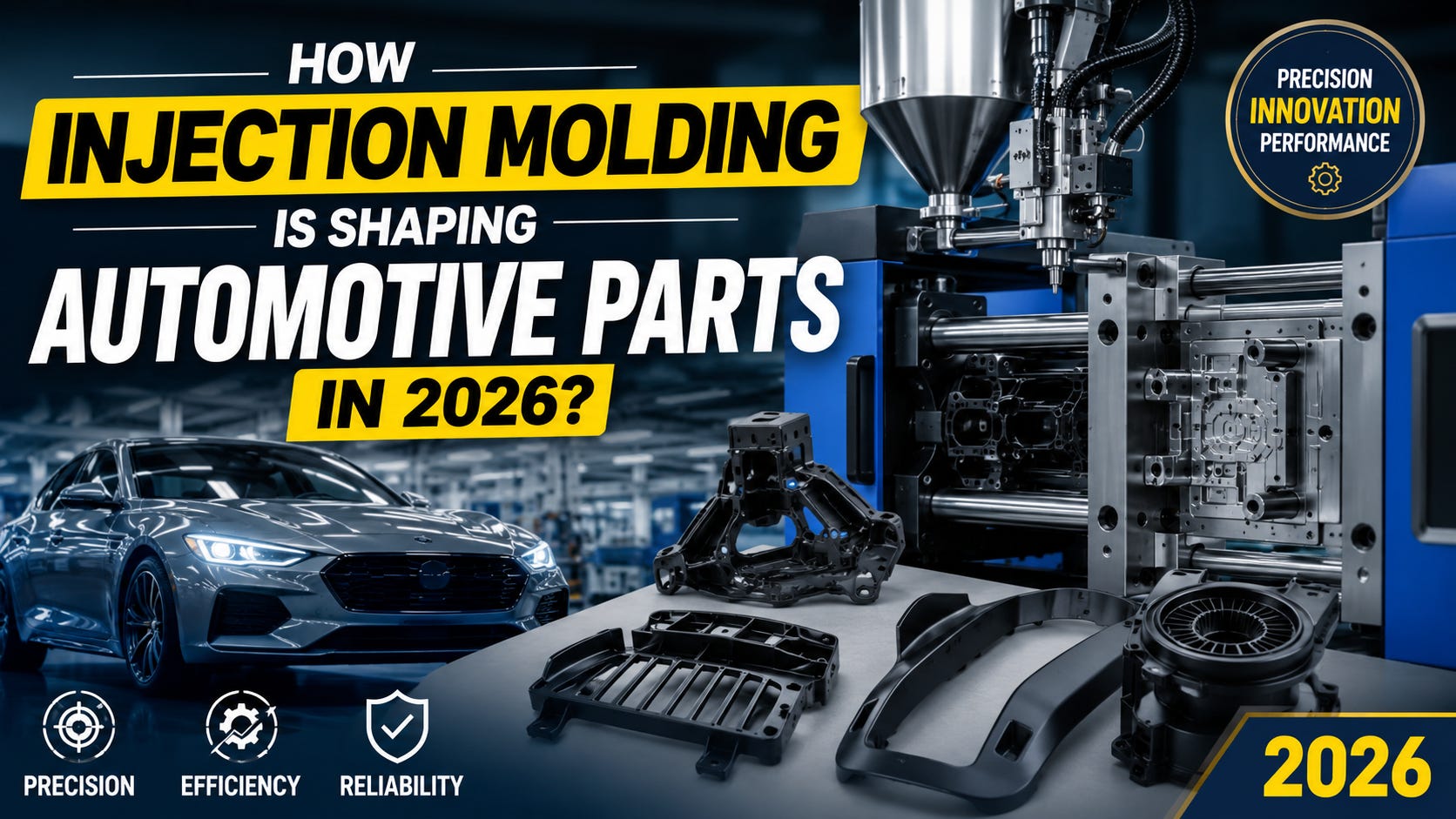
The modern mass produced cars are 50 percent plastic by total volume. The injection molding automotive parts combine consistent strength and low part variation. This technology drives the development of lighter and safer vehicles.
The manufacturers can produce millions of identical parts to exact tolerances. The injection molding automotive parts are used across every single system of a modern car. They have replaced metal in every common part application. It has also opened up entirely new possibilities for vehicle design and function.
Which Car Parts Come from Injection Molds?
Nearly half of all components in modern vehicles use this production method.
Interior Components
Dashboard panels and trim pieces are the single largest application for this process. Door handles and window controls are made to extremely tight tolerance levels.
Air vent systems and cup holders combine form and function in one part. Seat belt components require consistent strength across millions of units. Centre console parts integrate multiple mounting points and feature details.
The injection molding automotive parts make up over 90% of all visible interior surfaces. Most drivers never notice how many parts they interact with daily are made this way.
Under-the-Hood Parts
Fluid reservoirs and caps resist constant exposure to harsh chemicals and heat. Air intake manifolds deliver consistent airflow across all operating conditions.
Engine covers and shrouds reduce noise and contain heat from running components. Sensor housings protect delicate electronics from vibration and road debris. Battery components form sealed enclosures that meet strict crash safety standards.
The automotive injection molding is now the default method for under hood parts. This process eliminates almost all secondary operations required for alternative methods.
Exterior Elements
Bumper covers and grilles absorb low speed impact and define vehicle styling. Mirror housings are produced to exact aerodynamic and dimensional specifications.
Light assemblies and lenses require perfect optical clarity and UV stability. Mud flaps and splash guards protect body panels from road debris and salt. Roof racks and trim combine structural strength with finished appearance.
The injection molded automotive parts now replace almost every small exterior component that was once metal. Even premium luxury brands rely on this process for consistent finish quality.
How Does Material Choice Impact Auto Part Performance?
Every part is designed around a material that matches its exact operating requirements. A poor material choice leads to premature failure and expensive warranty claims.
ABS
ABS delivers consistent impact resistance for front and rear bumpers. This material maintains stable properties up to a maximum of 176 degrees Fahrenheit. Parts made from ABS are easy to paint and finish to match the body colour. It remains the most common general material for exterior trim.
Polypropylene
Polypropylene offers excellent chemical resistance for all types of fluid tanks. It remains flexible at low temperatures while retaining good structural strength.
The low density of this material delivers measurable improvements in fuel efficiency. It is the most widely used polymer in the entire automotive industry. The plastic injection molding automotive parts uses more polypropylene than all other materials.
Polycarbonate
Polycarbonate provides clear optical quality for headlight and taillight lenses. It offers extremely high impact resistance that exceeds most common metals. The special grades include built in UV stabilizers for long term outdoor use. This material will not shatter even in the event of a high speed collision.
Nylon
Nylon retains full structural strength at temperatures above 300 degrees Fahrenheit. It has naturally low friction properties ideal for moving and sliding components.
This material maintains dimensional stability even under continuous heavy load. It is the default choice for almost all under hood structural components.
Glass Filled Polymers
Glass filled polymers add significant strength without any corresponding weight gain. They offer substantially improved heat deflection under continuous operating load.
These materials eliminate part flex under normal operating conditions. They bridge the performance gap between unreinforced plastic and cast metal.
Why Are Auto Makers Switching from Metal to Plastic?
This transition has accelerated rapidly over the last five years across every segment. The automotive injection molding now delivers performance that was once only possible with metal.
A 10 per cent reduction in vehicle weight delivers a 6 to 7 per cent improvement in fuel economy
Plastic components do not rust or oxidise even after decades of exposure to road salt
The process allows far greater design freedom for aerodynamic and styling features
Polymer parts absorb vibration and noise far better than equivalent stamped metal parts
End of life plastic components are far easier to sort and recycle than mixed assemblies
The injection molded plastic auto parts now meet or exceed all current global crash safety standards. This will continue to accelerate through the end of the decade.
How Has Technology Advanced Auto Part Molding?
Recent advances in mold technology have transformed the capabilities of this entire process. Many parts that were impossible to produce ten years ago are now standard.
Smart Mold Features
Modern molds include built in sensors that monitor pressure and temperature every millisecond. The real time process data automatically identifies and prevents defects.
The control systems make tiny automatic cycle adjustments during every production run. Built in analytics generate predictive maintenance alerts before any failure occurs.
Multi Shot Molding
Multi shot molding produces parts with two or more separate colours in a single cycle. This process combines hard and soft materials on the same component without assembly.
It eliminates all secondary assembly and adhesive bonding steps. It is used to produce sealed control buttons and soft touch grips across all interiors.
Insert Molding
Insert molding places metal threads directly into the part during the molding cycle. Electrical contacts and terminals can be embedded permanently inside the plastic part.
This process creates extremely strong and consistent mounting points for all components. It reduces total assembly time for most parts.
How Plastic Injection Molds Support Auto Industry Innovation?
Plastic Injection Molds are the core development partners for every major auto maker. The custom mold design allows production of completely unique parts for each model. Rapid prototyping services allow testing of new designs in just a few days.
The high volume production capabilities support runs of over one million identical parts. Advanced CNC machining delivers mold precision measured in single digit microns.
Strict quality control systems meet all international automotive manufacturing standards. These manufacturers maintain deep experience with every grade of automotive resin. They deliver a fast turnaround from initial design to full volume mass production.
Their in-house engineering teams provide full technical support for material selection. Most operate on a true partnership model rather than a standard supplier relationship. All manufacturers implement continuous process improvement across every operation. The injection moulding automotive companies now participate in vehicle design from the very earliest stages.
Conclusion
The injection molding has completely transformed how vehicles are manufactured today. Plastic parts deliver better safety, efficiency and design freedom than metal. Ongoing advances in this technology continue to push practical boundaries.
It delivers benefits that no alternative production method can match. Upcoming electric vehicles will rely even more on these methods. Future vehicle platforms will use even more advanced engineered plastics.
Injection molding is changing how every automotive part is made today. Modern processes let us build lighter, stronger parts that cost less and last longer than older materials. If you need automotive parts produced, call us at (647) 294-5240 or email info@plasticinjection-molds.com.